UMKAY LEARNING LAB
Verify in proportion to what happens if it's wrong.
Verify AI answers in proportion to consequence using sources, dates, calculations, independent checks, documents, and tests.
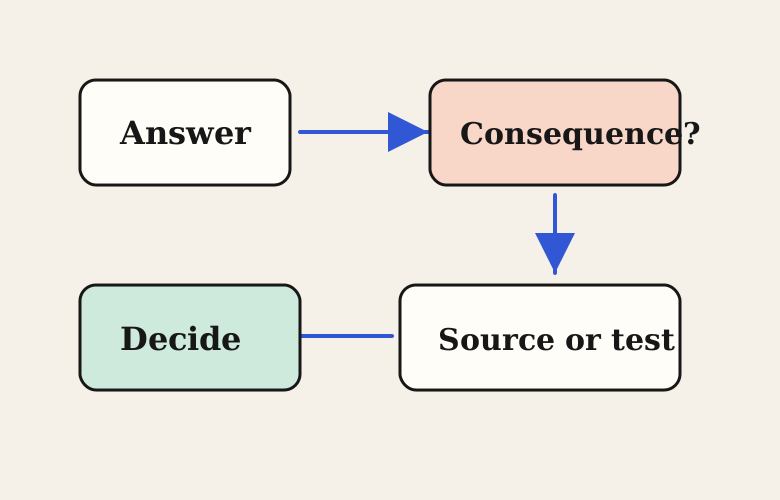
Use a consequence ladder
Low consequence work includes brainstorming, rewriting, meal ideas, naming options, and rough planning. You can accept more uncertainty because little breaks if the answer is off. Medium consequence work includes purchases, travel, technical changes, and professional communication. You should check the important facts, dates, compatibility, and tone. High consequence work includes health, law, safety, finance, security, and important factual decisions. Treat the answer as a starting point, not a decision.
Verification is not cynicism. It is proportion. A grocery idea does not need a research protocol. A medication, contract, tax move, production command, or security change deserves primary sources, qualified advice where appropriate, and a slower decision.
Methods that actually help
Ask for sources, then inspect the sources yourself. Prefer primary sources when the claim matters: official documentation, the actual policy, the statute, the vendor page, the original paper, the transaction record, or the real file. Check dates because AI may blend old and new information. Reproduce calculations. Compare independent sources. Inspect the actual document instead of relying on a summary.
For code, run the code or tests. For a command, understand what it touches before executing it. For a purchase, verify current price, compatibility, return policy, and recent reviews. For medical, legal, financial, or safety topics, use AI to prepare questions and organize information, then consult the appropriate qualified source.
Ask what the answer depends on
A powerful verification prompt is: 'What assumptions does this answer depend on, and what would change your conclusion?' Another is: 'Separate facts you can support from inferences and guesses.' Watch for the difference between 'I found no evidence' and 'there is evidence of none.' Those are not the same.
AI can help you build a checklist: source, date, calculation, conflict, missing information, consequence, decision. The final judgment remains yours.