UMKAY LEARNING LAB
How to use ChatGPT better without learning magic words.
A practical beginner guide to using ChatGPT with clearer goals, better context, useful constraints, revision, and verification.
Start with the real goal
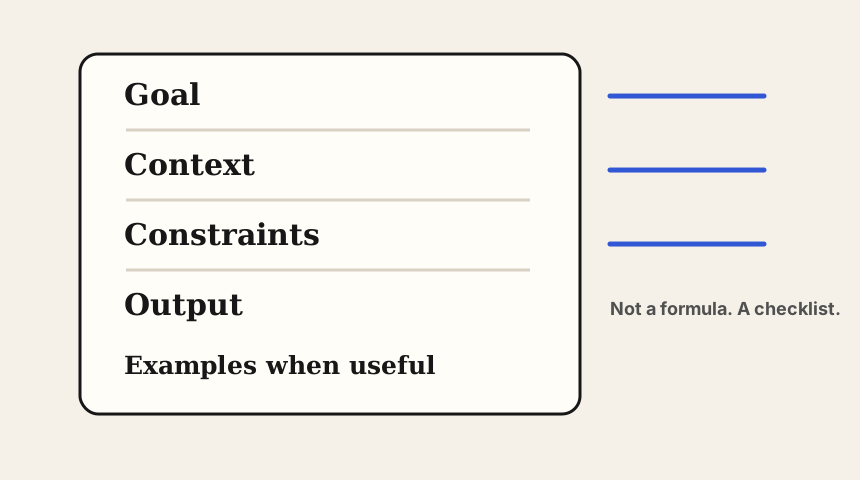
Many mediocre ChatGPT answers begin with a vague task: write this, explain that, make it better. The model answers the surface request because it does not know the real objective. If you want a job email, say whether you need warmth, brevity, firmness, diplomacy, or a paper trail. If you want help understanding a document, say whether you need a plain-language summary, risks, missing facts, or questions to ask someone.
Poor prompt: 'Make this better.' Better prompt: 'Rewrite this email so it is firm but not hostile. Keep the facts, remove the apology, and end with a clear next step.' The second version gives the tool a job it can actually perform.
Give the context that changes the answer
Useful context includes audience, current state, constraints, definitions, what you tried, what failed, and what would make the answer wrong. Context does not mean dumping every private detail. If a representative example is enough, use one. If a number can be rounded, round it. If a name is unnecessary, remove it.
State the output you need. Ask for bullets, a table, a checklist, a short draft, a decision memo, or three alternatives. If you have an example of the tone or format you want, include it. Examples reduce ambiguity faster than abstract adjectives.
Revise instead of restarting
The first answer is a draft. Tell ChatGPT what missed the mark: too generic, too long, too confident, wrong audience, bad assumption, missing source, unsuitable tone. Ask for alternatives when you are not sure which direction is best. Ask what information would change the answer.
Separate brainstorming from factual research. Brainstorming can be loose. Important facts need dates, sources, and checks against primary material when the consequence is real. ChatGPT can help you plan the verification, but it should not be the final authority on high-consequence claims.