UMKAY LEARNING LAB
Better prompts are mostly better instructions.
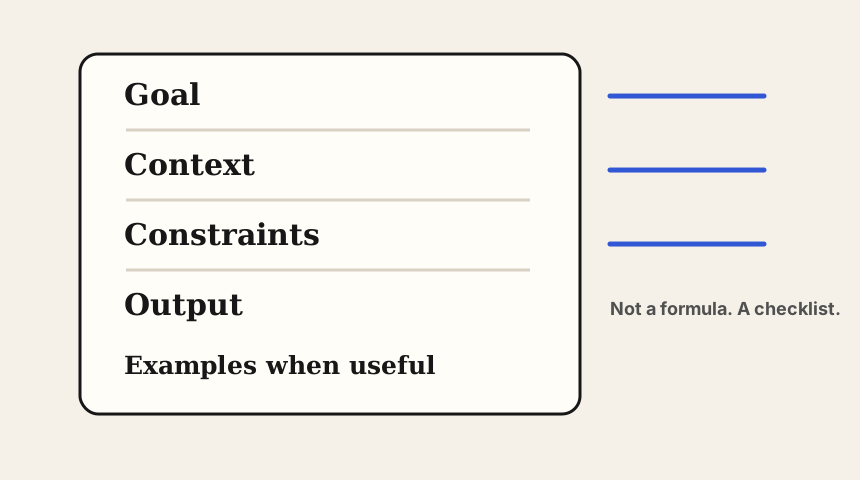
Better prompts are clear instructions: goal, context, constraints, output, and examples when examples reduce ambiguity.
A prompt is a work order
The useful structure is simple: goal, context, constraints, output, and examples. None of those fields is mandatory every time. They are reminders to include the parts that would change the result. The mistake is treating a prompt like a magic spell. The better habit is treating it like a clear handoff to a capable assistant who does not know your situation unless you say it.
Goal: what are you trying to accomplish? Context: what does the AI need to know? Constraints: what must it preserve, avoid, or account for? Output: what would a useful result look like? Examples: what pattern should it follow when words alone are ambiguous?
Vague to useful
Vague: 'Help me plan a trip.' Useful: 'Plan a three-day trip for two adults in Chicago in October. We like architecture, food, and walking. Keep each day under four scheduled items and include one indoor backup for bad weather.'
Vague: 'Explain this.' Useful: 'Explain this contract paragraph in plain English, identify obligations, point out unclear terms, and list questions I should ask before signing. Do not give legal advice; help me understand what to ask.'
Vague: 'Write a prompt.' Useful: 'Help me ask ChatGPT for a concise decision memo comparing these three options. The memo should include assumptions, tradeoffs, risks, and what facts would change the recommendation.'
Use constraints as steering
Constraints are not decoration. They tell the model what to preserve and what not to do. Constraints can be about tone, length, sources, reading level, budget, platform, audience, privacy, or risk. Good constraints also name failure: 'Do not invent policy details. If you cannot verify a claim, mark it as uncertain.'
The best prompt is the one that gets you into a useful working loop quickly. When the result is close, correct it. When it is wrong, name the wrong assumption. When the task matters, verify.