UMKAY LEARNING LAB
AI can be useful and still be wrong.
Understand made-up details, old facts, hidden assumptions, tool failures, over-trusting AI, and long-task drift without treating AI as useless.
Fluency is not evidence
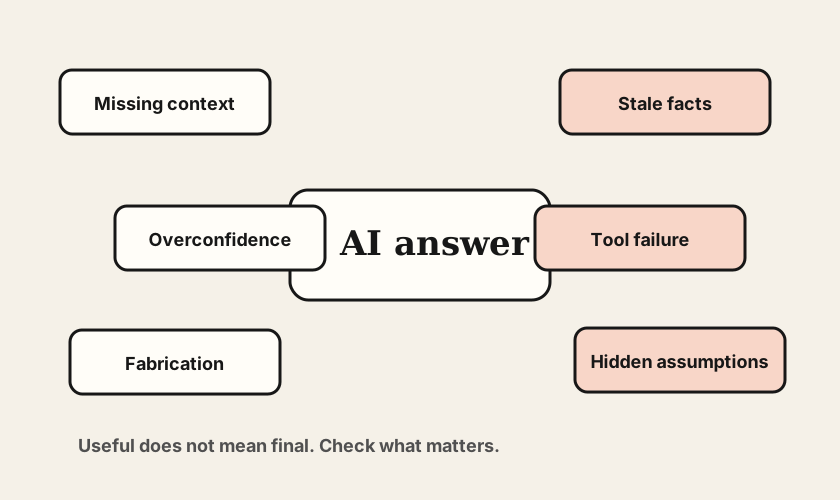
AI can sound smooth and finished even when it is wrong. It can make up a source, blend two similar facts, use old information, fill in a gap with a bad assumption, or agree with you too easily. It may sound more certain than the evidence deserves.
This does not make AI useless. It means AI is strongest when used for drafts, structure, comparison, explanation, exploration, and planning verification. It is weaker when treated as a final authority on facts that matter.
Common failure modes
Hallucination is invented material presented as if it were real. Stale information is an answer that was once true or sounds current but is no longer reliable. Missing context causes the model to solve the wrong problem. Hidden assumptions fill gaps you did not mean to leave open. Tool or API failures can produce partial results. Ambiguity lets the answer optimize for a different interpretation than yours.
Long tasks can also drift. The model may lose track of the original objective, overfit to recent turns, or keep producing work after the right move is to stop and decide.
Use limits as design information
The right response is not fear. It is workflow. Give better context. Ask for assumptions. Require uncertainty labels when facts matter. Verify in proportion to consequence. Keep humans responsible for decisions. Use AI to make work more legible, not to hide responsibility behind a confident paragraph.
A capable AI user can say both things at once: this tool is useful, and this answer still needs checking.