UMKAY LEARNING LAB
Useful context is not the same thing as every detail.
A practical privacy guide for sharing useful context with AI while minimizing secrets, identifiers, confidential documents, and third-party data.
Minimize before you paste
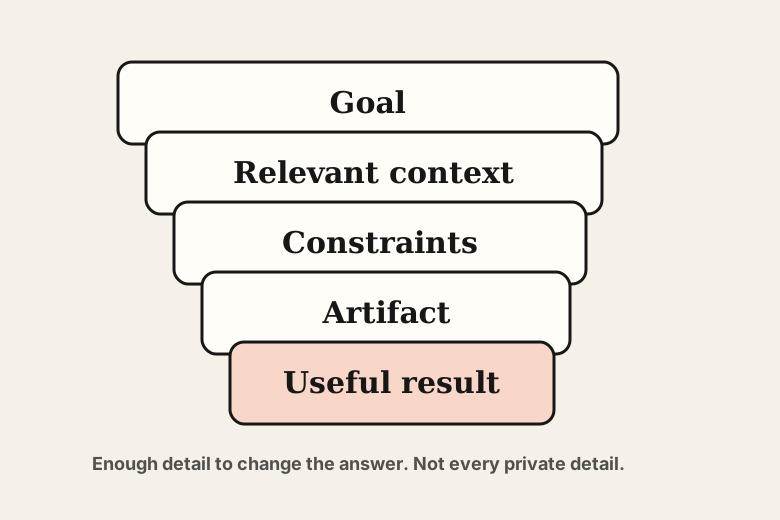
AI works better with context, but context should be purposeful. Do not share passwords, authentication secrets, private keys, account numbers, unnecessary financial identifiers, confidential employer documents, private customer information, private health information, children's information, or identifying third-party details unless you have a clear right and need to do so in the service you are using.
Most ordinary tasks need less raw private material than people think. You can redact, summarize, substitute representative values, use roles instead of names, or ask with a smaller excerpt. The question is not 'could this help?' The question is 'does this task actually require it?'
Practical patterns
For a contract, paste the clause you need explained and remove names or numbers that do not matter. For a customer message, describe the issue without exposing private customer records. For a technical problem, replace real tokens with placeholders. For finances, use rounded examples unless exact values are necessary. For health, use AI to organize questions and vocabulary, not to replace qualified care.
Understand the service and account policy being used. Different accounts, workspaces, settings, and products can have different data controls. Do not assume a tool is private because it feels like a chat box.
Privacy is part of judgment
The privacy habit is not panic. It is proportionality. Share enough to get a useful answer, remove what does not change the answer, and slow down when the material belongs to someone else. If the model asks for sensitive material that is not required, say no and ask for a safer way to proceed.
HomeRoom includes privacy judgment because an independent AI user should know how to get help without giving away the whole room.